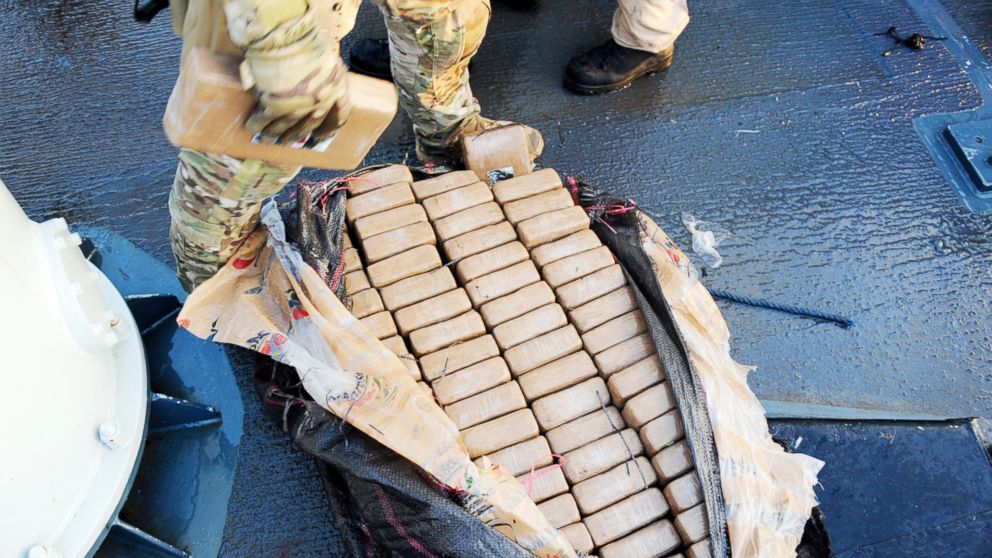
The CIA’s Role in the Drug War: Interdiction & Controversy

newtownrrt.org – The Central Intelligence Agency (CIA) has played a significant role in the United States’ efforts to combat drug trafficking and abuse, commonly referred to as the Drug War. Since the 1980s, the CIA has been involved in various interdiction operations aimed at disrupting drug supply chains and dismantling criminal networks. However, the agency’s involvement in the Drug War has also sparked controversy, with allegations of complicity in drug trafficking and violations of human rights. This article explores the CIA’s role in the Drug War, examining its interdiction efforts and the controversies that have surrounded its activities.

The CIA’s Interdiction Efforts

The CIA’s involvement in the Drug War primarily focuses on intelligence gathering and operational support. The agency uses its vast network of informants, surveillance capabilities, and analytical expertise to identify and track drug trafficking organizations. The CIA also collaborates with other U.S. agencies, such as the Drug Enforcement Administration (DEA) and the Department of Defense, as well as international partners, to plan and execute interdiction operations.

Intelligence Gathering

The CIA’s intelligence gathering is crucial for understanding the complex networks involved in drug trafficking. By collecting and analyzing information on production facilities, transportation routes, and financial transactions, the agency provides critical insights that enable law enforcement agencies to disrupt drug operations.

Operational Support

The CIA often provides operational support to interdiction efforts, including the use of surveillance technology, intelligence sharing, and logistical support. The agency’s involvement can range from providing real-time intelligence during raids to assisting in the planning of complex operations.

Controversies Surrounding the CIA’s Role

Despite its interdiction efforts, the CIA has faced significant criticism and controversy regarding its role in the Drug War. Several allegations have been made against the agency, including complicity in drug trafficking, human rights abuses, and undermining democratic institutions.

Allegations of Complicity in Drug Trafficking

One of the most controversial aspects of the CIA’s involvement in the Drug War is the allegation that the agency has turned a blind eye to, or even facilitated, drug trafficking by individuals or groups aligned with U.S. interests. These allegations stem from instances where the CIA has been accused of working with drug traffickers to support covert operations or to fund anti-communist movements.

Human Rights Abuses

The CIA’s interdiction efforts have also been criticized for contributing to human rights abuses. In some cases, the agency’s operations have led to the extrajudicial killings, torture, and detention of suspected drug traffickers, raising concerns about due process and international law.

Undermining Democratic Institutions

Critics argue that the CIA’s involvement in the Drug War has sometimes undermined democratic institutions in countries where it operates. By supporting authoritarian regimes or engaging in covert actions that bypass local laws and governance, the agency has been accused of eroding democratic principles.

Conclusion

The CIA’s role in the Drug War is a complex and controversial issue. While the agency’s interdiction efforts have contributed to disrupting drug trafficking networks and reducing the supply of illicit drugs, the controversies surrounding its activities raise significant ethical, legal, and political questions. As the Drug War continues to evolve, the CIA’s involvement remains a subject of intense debate, reflecting the broader challenges of balancing national security with human rights and international law.

The War on Terror: Post-9/11 Era

newtownrrt.org – In the aftermath of the September 11, 2001, terrorist attacks on the United States, the global landscape was irrevocably altered. The War on Terror, a term coined by then-President George W. Bush, emerged as a central theme in U.S. foreign policy and had a profound impact on international relations, security measures, and the legal frameworks governing counterterrorism efforts. This article examines the key aspects of the War on Terror in the post-9/11 era, its implications, and its evolution over time.

The Genesis of the War on Terror

The War on Terror was officially declared by President Bush in response to the 9/11 attacks, which were carried out by the extremist group al-Qaeda led by Osama bin Laden. The attacks prompted the United States to launch a military campaign in Afghanistan in October 2001, with the aim of dismantling al-Qaeda and removing the Taliban regime, which had provided sanctuary to the terrorist organization.

Expansion of the War on Terror

The scope of the War on Terror expanded significantly with the invasion of Iraq in March 2003. The U.S.-led coalition justified the invasion on the grounds of Iraq’s alleged possession of weapons of mass destruction and its purported links to al-Qaeda. However, no such weapons were found, and the invasion led to a prolonged insurgency and sectarian violence, ultimately destabilizing the region.

Counterterrorism Measures and Controversies

In the name of national security, the U.S. government implemented a range of controversial measures, including the USA PATRIOT Act, which expanded law enforcement surveillance powers. The establishment of the Guantanamo Bay detention camp and the use of enhanced interrogation techniques, often criticized as torture, sparked debates over human rights and the rule of law.

The Rise of ISIS and the Shifting Battlefield

The War on Terror entered a new phase with the rise of the Islamic State of Iraq and Syria (ISIS) in 2014. ISIS capitalized on the power vacuum created by the conflict in Syria and the withdrawal of U.S. troops from Iraq. The group’s brutal tactics and territorial ambitions led to a multinational coalition to combat ISIS, employing both conventional military force and targeted airstrikes.

The War on Terror and Civil Liberties

The War on Terror has had a significant impact on civil liberties, both in the United States and abroad. Surveillance programs, such as those revealed by Edward Snowden, raised concerns about privacy and government overreach. Balancing security with civil liberties has been a recurring challenge in the post-9/11 era.

The Long-Term Impact

The War on Terror has had a lasting impact on global politics, security, and society. It has led to a heightened focus on counterterrorism and homeland security, with significant resources dedicated to preventing terrorist attacks. However, it has also resulted in a complex web of conflicts, humanitarian crises, and a reconfiguration of international alliances.

Conclusion

The War on Terror, now spanning over two decades, has been a defining feature of the post-9/11 era. It has reshaped the world in profound ways, from the battlefields of Afghanistan and Iraq to the corridors of power in Washington, D.C. As the nature of terrorism continues to evolve, so too must the strategies to combat it, while upholding the values of democracy and human rights that are at the heart of the fight against extremism.

World War II: Civilian Experiences and The Home Front

newtownrrt.org – World War II, a global conflict that lasted from 1939 to 1945, was not only a military struggle but also a profound test of endurance and resilience for civilians on the home front. The war’s impact was felt in every corner of the world, transforming daily life, economies, and societies. This article explores the experiences of civilians during World War II, highlighting the sacrifices, challenges, and changes that occurred on the home front.

Economic Mobilization and Rationing

One of the most immediate impacts of World War II on civilians was the economic mobilization required to support the war effort. Governments across the globe implemented rationing systems to ensure that essential goods, such as food, clothing, and fuel, were distributed fairly and efficiently. In the United States, for example, families received ration books with stamps that could be exchanged for limited amounts of sugar, meat, and gasoline. This system encouraged conservation and ensured that resources were prioritized for the military.

Women in the Workforce

The war created a significant shift in the workforce, particularly for women. With men enlisting in the military, there was a shortage of labor in factories, farms, and offices. Women stepped into these roles, taking on jobs traditionally held by men. The iconic image of “Rosie the Riveter” symbolized this shift, representing the millions of women who worked in industrial jobs to support the war effort. This period marked a turning point for gender roles in the workplace, paving the way for greater participation of women in the economy.

Propaganda and Morale

Governments used propaganda to boost morale and encourage support for the war effort. Posters, films, and radio broadcasts urged civilians to conserve resources, buy war bonds, and maintain a positive outlook. Propaganda also played a crucial role in shaping public opinion about the enemy and the necessity of the war. While effective in rallying support, it also contributed to fear and mistrust, particularly towards minority groups and those of enemy descent.

Impact of War on Children

Children were profoundly affected by the war. In countries directly involved in combat, such as Britain and Germany, children were evacuated from cities to safer rural areas to protect them from bombings. These evacuations, while intended to keep children safe, often resulted in emotional trauma as children were separated from their families for extended periods. Education was also disrupted, with many children forced to attend makeshift schools or miss schooling altogether.

Civilian Casualties and Displacement

Civilian casualties were a tragic reality of World War II. The bombing of cities, including London, Coventry, and Dresden, resulted in thousands of civilian deaths. The Holocaust and other genocidal campaigns led to the systematic murder of millions of civilians, including Jews, Poles, Romani people, and others deemed undesirable by the Nazi regime. The war also led to the displacement of millions, creating a humanitarian crisis that lasted long after the war’s end.

Conclusion

The home front during World War II was a complex tapestry of sacrifice, resilience, and change. Civilians around the world faced unprecedented challenges, from economic hardship and rationing to the fear of loved ones in harm’s way. Yet, they also demonstrated remarkable strength and adaptability, contributing to the war effort in countless ways. The experiences of civilians during World War II underscore the profound impact of war on society and the enduring spirit of those who lived through it.