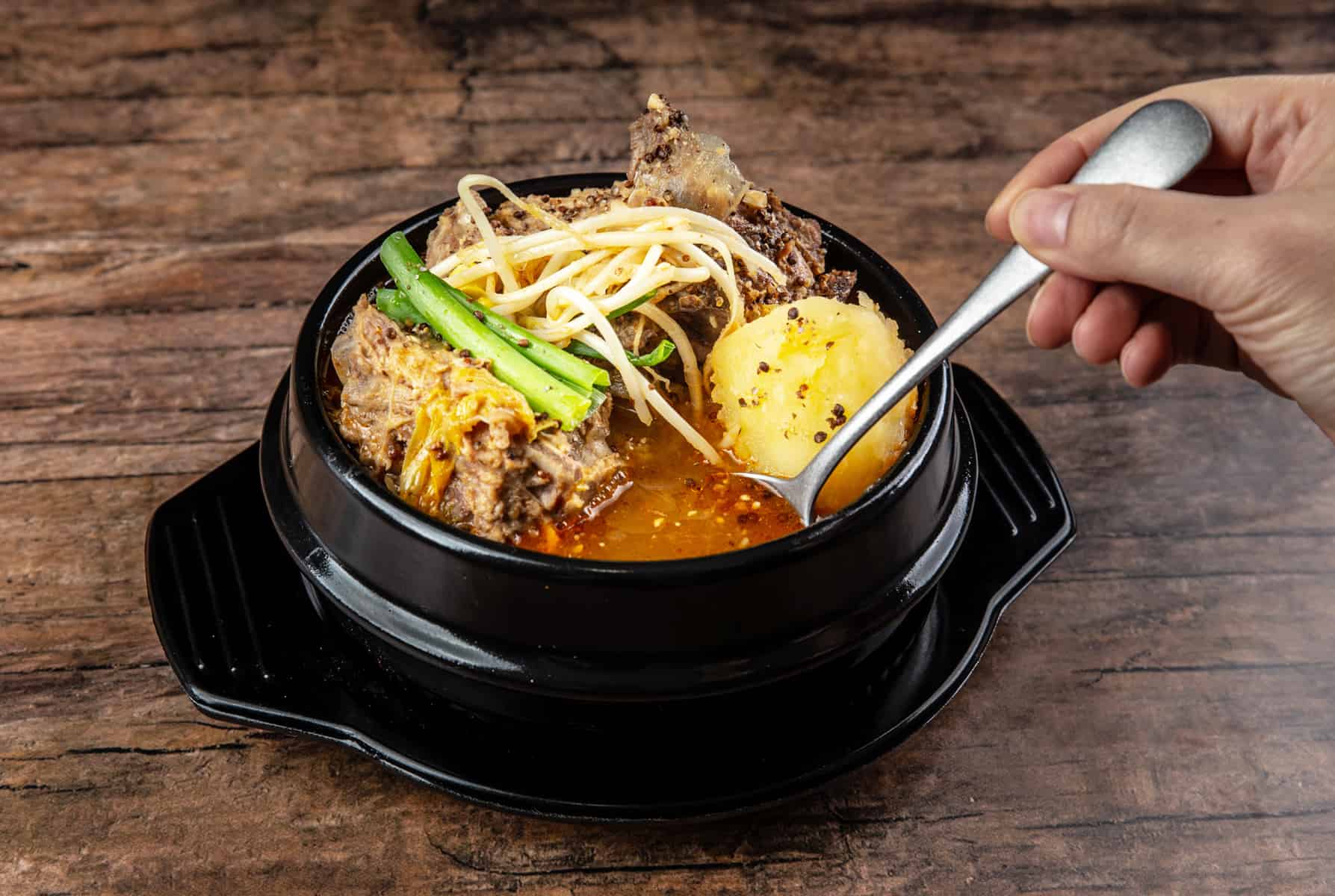
Gamjatang: A Hearty Korean Pork Bone Soup

newtownrrt.org – Gamjatang, a traditional Korean pork bone soup, is a beloved comfort food known for its rich flavors and nourishing qualities. This robust and spicy soup features tender pork bones and hearty potatoes, making it a staple in Korean households and restaurants alike. This article delves into the history, ingredients, and preparation of Gamjatang, highlighting why it remains a favorite among Korean dishes.

History and Cultural Significance

Gamjatang has its roots in the Korean farming communities, where it served as a hearty meal to sustain hard-working farmers. The soup is believed to have originated in the southern regions of Korea, particularly in Jeolla Province. It was traditionally made with leftover pork bones, turning an otherwise humble ingredient into a flavorful and satisfying dish.

Over time, Gamjatang has become a popular dish throughout Korea, enjoyed for its warming qualities and depth of flavor. It is often consumed during colder months or as a hangover remedy, thanks to its comforting and nutritious properties.

Ingredients and Preparation

The key to a delicious Gamjatang lies in the slow simmering of pork bones, which releases rich flavors and nutrients. The soup is characterized by its spicy and savory broth, complemented by tender meat and soft potatoes.

Key Ingredients

  1. Pork Neck Bones: These bones are the cornerstone of Gamjatang, providing the soup with its rich and meaty base.
  2. Potatoes: Potatoes add heartiness to the dish, absorbing the flavors of the broth.
  3. Spices and Seasonings: Key seasonings include gochugaru (Korean red pepper flakes), doenjang (fermented soybean paste), and gochujang (red chili paste) for a spicy kick.
  4. Vegetables: Napa cabbage, perilla leaves, and green onions are commonly added for texture and freshness.
  5. Perilla Seeds: Ground perilla seeds contribute a unique nutty flavor and are a traditional addition to the soup.

Preparation Steps

  1. Preparing the Pork Bones: Clean and soak the pork bones in cold water to remove impurities. Boil them briefly, then rinse and set aside.
  2. Making the Broth: In a large pot, simmer the pork bones with water for several hours. This slow cooking process extracts the marrow and flavors, creating a hearty broth.
  3. Seasoning the Broth: Add gochugaru, gochujang, and doenjang to the broth, adjusting the spice level to taste. Include garlic and ginger for additional flavor.
  4. Adding Vegetables and Potatoes: Once the broth is well-seasoned, add potatoes and simmer until tender. Then, add napa cabbage and perilla leaves.
  5. Finishing Touches: Just before serving, stir in ground perilla seeds and garnish with chopped green onions for a fresh burst of flavor.

Conclusion

Gamjatang is more than just a soup; it’s a culinary experience that embodies the warmth and richness of Korean cuisine. With its spicy broth, tender pork, and hearty potatoes, Gamjatang is a dish that satisfies both the palate and the soul. Whether enjoyed at home or in a bustling Korean restaurant, this traditional soup remains a comforting and delicious reminder of Korea’s vibrant food culture.

A Sip of the Sky-High Priced Delicacy: Bird’s Nest Soup

In the realm of culinary delights, few dishes evoke a sense of mystique and luxury quite like bird’s nest soup. This ancient Chinese delicacy, steeped in history and tradition, is renowned not only for its exquisite taste but also for its sky-high price tag. The soup is made from the nests of swiftlets, small birds that belong to the Apodidae family, which are meticulously constructed from the birds’ saliva. These nests, which can take the swiftlets up to 30 days to build, are harvested, cleaned, and then boiled with water and rock sugar to create a gelatinous, translucent broth that is believed to offer a myriad of health benefits.

The allure of bird’s nest soup lies not only in its unique ingredients but also in its historical significance. It has been a part of Chinese cuisine for centuries, with records dating back to the Ming Dynasty (1368-1644). The soup was once reserved for the emperor and his court, a symbol of wealth and status. Today, it remains a luxury item, often served at special occasions such as weddings and banquets, and is considered a gift of great esteem.

The process of harvesting the nests is both fascinating and controversial. Swiftlets build their nests in remote caves and on cliff faces, making the harvesting process dangerous and labor-intensive. In recent years, man-made swiftlet houses have been constructed to encourage the birds to nest in more accessible locations. However, the ethical implications of harvesting the nests, which are essentially the birds’ homes, have sparked debate among conservationists and animal rights activists.

Despite the controversy, the demand for bird’s nest soup continues to soar, driven by its purported health benefits. Traditional Chinese medicine attributes various healing properties to the soup, including improved skin complexion, enhanced vitality, and even anti-aging effects. Modern research has begun to explore these claims, with some studies suggesting that the soup may indeed have certain health benefits, such as boosting the immune system and aiding in tissue repair.

The high cost of bird’s nest soup can be attributed to several factors, including the rarity of the nests, the laborious harvesting process, and the meticulous cleaning required to remove impurities such as feathers and other foreign matter. Prices can vary widely depending on the quality of the nests, with the highest grades fetching thousands of dollars per kilogram.

Despite its hefty price tag, bird’s nest soup remains a coveted dish among those who can afford it. Its delicate flavor and the health benefits it is believed to offer make it a unique indulgence. For many, a sip of bird’s nest soup is not just a culinary experience but a taste of tradition and luxury that has been cherished for generations.

In conclusion, bird’s nest soup stands as a testament to the lengths to which humans will go to indulge in the finer things in life. It is a delicacy that transcends the ordinary, offering a blend of history, tradition, and potential health benefits that few other foods can match. While its high cost and ethical considerations may give some pause, for those who partake, it is a sip of the sky-high priced delicacy that promises a taste of the extraordinary.